If you like this blog, please click "like". Thank you!

2010年11月23日 星期二

Golden Age Tour( Part 3)

The Golden Age Tour was finished a half part of journey, is it interesting? Third station is Central Police Station; it is located in Hollywood road. When you visit the street, you can visit the police station. What feature of the station? This is old building in 1864, it is long history construct in Hong Kong. The government was important to conversation of building It is unique hertiage and key community in Central.Recently, Hong Kong Jockey Club Charities Trusts have the projects to conversation the old building, in order to retain the leisure and art facility. It is the meaningful activities in Hong Kong. You can see that, Central Police Station is the important for our community.

You visit the Western and Central trail, it is easily to see the outside of Central Police Station. The Victoria prison may also be converted into either a theatre or a museum. The famous tourist destination is historical significance, a rarity amongst Hong Kong attractions.Headquarters Block was constructed in 1919. Also, the two-storey Stable Block was constructed in 1925 at the north-west. The Police Station together with the former Central Magistracy and Victoria Prison. I think you have different experience in this tour!

When you see the Central Police Station., you will feel that the age was change raidly. The commercial ceture or moden building was nearby by Central Police Station. It is the landmark of local resident and alike for foreign people.However, the station was not always open for public. It is use on the venue of art exhibition. I suggest that it is valuable to spend time to visit! Let’s we reminiscence.

How to Go: MTR ( Cental Exit D) , accross Queen's Road Central almost 3 minutes.

By Renee Lam


2010年11月21日 星期日

My experience in the Ping Shan Heritage Trail (Part 2)

Last time, I just introduced a heritage building in Ping Shan Trail. Now I want to introduce some buildings to all of you that I think these are worth to visit in there.

Ping Shan Tang Clan Gallery cum Heritage Trail Visitors Centre


The Former Ping Shan Police Station was established to maintain public security in 1898 and located at the top of Ping Shan. It stopped operating until the Yuen Long Police Station establishment in 1965. In 2002, it was passed to Leisure and Culture Services Department redevelopment and revitalization of the ruins to a Ping Shan Tang Clan Gallery as well as Heritage Trail Visitors Centre. The Centre is converted from the Old Ping Shan Police Station built in 1899 and the main building is a two-storey structure with an embracing arched verandah that comprises three galleries. Moreover, the other heritage like Tang Ancestral Hall was made by wood. In 2004, plenty of termites eroded the hall. As a result, the pillars and crossbeam were damaged. Thus, the government has renovated to avoid termites erosion. Now, it is a place to hold different exhibition which cooperated with variety of schools to show the history or culture to the visitors. The theme also will be changed by the students irregularly to exhibits various historical or cultural stories in Hong Kong for the visitors.


Yeung Hau Temple & Hung Shing Temple

These two temples have long history with Chinese tradition. The structures of buildings were designed by “Fung Shui” theory. The Chinese were very superstitious even nowadays. The guides will explain some the meaning of Fung Shui for the buildings. Now, I am going to brief about the background of these temples.


The Yeung Hau Temple is one of the six temples in Yuen Long dedicated to the deity of Hau Wong. It is a simple structure, divided into three bays housing the statues of Hau Wong, To Tei (God of the Earth) and Kam Fa (Patron Saint of Expectant Mothers) respectively. The exact date of construction of the Temple could not be traced although it is believed to have a history of several hundred years. Inscriptions on the boards inside the Temple indicate that the building underwent two major renovations in 1963, 1991 and 2002 respectively. In the past, the villagers in Ping Shan believed that Yeung Hau was Marquis Yang Liang-jie, a Song dynasty general who gave up his life to protect the last two emperors of Song dynasty. He was worshipped for his loyalty and bravery.


The Hung Shing Temple is a simple building with two halls separated by an open courtyard. It is thought to have been built by the Tang clan in 1767 during the Qianlong reign of the Qing dynasty which is the year inscribed on the board inside the temple. The existing structure was rebuilt in the 5th year of the Tongzhi reign which is in the Qing dynasty - 1866. The substantial renovation work was carried out in 1963. The legend is about the Hung Shing was originally a governor of Kwong Lee during the Tang dynasty who was known by the name Hung Hei. After his death, the reigning emperor awarded him the posthumous title of "Kwong Lee Hung Shing Tai Wong". He is widely worshipped, particularly by fishermen and people whose livelihood depend largely on the sea.

2010年11月18日 星期四

Waterworks Heritage Trail


Hong Kong to many people, visitors and residents, means crowded streets and shops; bustling markets; busy bars and restaurants and traffic jams. Hong Kong is all of this......but more. Much more.

Just a short ride from the heart of the city lies the beautiful, scenic Tai Tam Country Park - one of the many of the territory's country parks which comprise some 43% of the total land area. This Country Park is home to one of the newest and most unusual of the city's heritage trails - the Tai Tam Waterworks Heritage Trail.

When the British came to Hong Kong in the mid 19th century the authorities soon found that the existing water supply, consisting of wells and streams, was insufficient for the needs of the rapidly developing city. The Government then embarked upon an ambitious civil engineering programme of reservoir construction.

One of the most extraordinary construction projects undertaken by the authorities was the building of the Tai Tam reservoir complex, in what is now the country park of that name, between 1883 and 1918. In September 2009 this complex of dams, pumping houses and other buildings were designated historic monuments and the Heritage Trail was created. The trail is approximately 6 kilometres in length and winds its' way through the park.


Walking distance 6 kms
Facilities: Toilets en route


2010年11月17日 星期三

Heritage of Central district

The future meets the past in Hong Kong and nowhere can you see this more clearly than in the Central district. We see among historic buildings that are nestled amid stunning skyscrapers, where the ancient art of feng shui influences modern architecture, along streets whose very names evoke the colourful history of this amazing territory.


The heart of Hong Kong city, the Central district, has been developing since inception of British rule in 1841. Western-style buildings sprang up as the city grew prosperously and the early 20th century saw Hong Kong develop into a metropolis. Extensive reclamations extending the waterfront and development projects were carried out during different periods and although the outlook of the city is ever changing, many historical buildings and structures still survive as standing testimony to the history of the Central district.


Statue Square - over which a seated bronze statue of Queen Victoria once reigned. Within the square stands the elegant and modern HSBC – the fourth HSBC building to occupy the site over a period of 150 years. Built in the early 1980s by Lord Norman Foster, it is a fascinating example of how feng shui and modern environmental features have been merged in present-day Hong Kong.

The Legislative Council - one of Hong Kong’s last remaining colonial buildings. Built from Kowloon granite in the neoclassical style, this elegant and historic building once served as the Supreme Court and is situated on reclaimed land.

The Court of Final Appeal - a building of historic importance in Hong Kong. The present three-storey building was built in 1917 on the foundation of a previous structure and is constructed of granite and red bricks. The first Governor of Hong Kong, Sir Henry Pottinger, resided there from 1843 to 1846. The building then had several owners (including an American trading house and the Russian consulate), and was acquired by the French Mission in 1915 - a name by which it is still commonly referred today.

St John’s Anglican Cathedral - this beautiful Cathedral, built in the shape of a cross, is a survivor of the earliest buildings of the British era, built on the only freehold lease in Hong Kong, and is unchanged since it early days. It is the oldest surviving Western ecclesiastical building in Hong Kong, and the oldest Anglican church in the Far East, with construction completed in 1849. It was declared a monument in 1996.

2010年11月14日 星期日

Miu Fat Buddhist Monastery


Buddhist Monastery is one of the popular heritages in Hong Kong. When we talk about Hong Kong heritage, it cannot do without Buddhist Monastery. Today I would like to introduce a Buddhist Monastery which located in Tuen Mun. I always see the Miu Fat Buddhist Monastery in my home; it's a magnificent building really.


The monastery was built in 1950 but the adjoining three-storey Ten Thousand Buddhas Pagoda, which took six years to build, was completed and enshrined in May 1980. The magnificent Main Worship Hall has a building height of about 21 metres and features three 4.8 metre tall gold-plated statues of Buddha Sakyamuni. Its interior walls are adorned with thousands of Buddha images and paintings featuring Thai and Chinese culture. The Pagoda comprises a vihara and the Court of the Jade Buddha. A 20-metre column carved with giant gold-plated dragons on both sides guards the main entrance of the pagoda. The monastery also offers vegetarian food.

The 7-storey main complex of Miu Fat Monastery is now opened. The complex is meticulously designed with Lotus Shrine on top floor resembling a gigantic crystal lotus blossom viewed from afar. Open to the public from 9am - 5pm every day.

Address: 18 Castle Peak Road, Lam Tei, Tuen Mun, New Territeries

2010年11月11日 星期四

Hong Kong Railway Museum


Hong Kong Railway Museum is an open-air railway museum opened in 1985,which located in Shung Tak Stree ,Tai Po. It is a branch museum of the Hong Kong Heritage Museum and now under the management of the Leisure and Cultural Service Department.. It is located at the site where the Old Tai Po Market Railway Station was built in 1913.

The Kowloon-Canton Railway (British Section) opened in 1910 and Tai Po Market Railway Station was built in 1913 , was one of the stops in the New Territories. At that time, it acted as a centre of administration and trade which indirectly boosted Tai Wo Market's economy by bringing traders there. As the KCRC introduction the electric trains in 1980s ,the new Tai Po Market Railway Station opened in 1983 (to the north (Tai Wo) and south (Tai Po Market)), so the old Tai Po Market Railway Station was close in the same year of April 6.In 1984 KCRC given the old Tai Po Market Railway Station(he buildings and relevant exhibits) to government for the construction of the Museum and opened at 1985.With the long history of this station , it is vaulable for tourist to visit and know about the old Hong Kong.


Inside the museum, it includes the distinctive station building , a narrow-gauge steam locomotive was added the museum in1997, a diesel electric engine named “Sir Alexander” locomotive No. 51 which introduced in Hong Kong in 1955 and added into the museum in2004, also there are six historical coaches that the people are willing to go inside the train to sit and touch it ,so it can increase the experiential values of this station . Other than that there is a red-brick office building too .In the museum there was displaying a lot of the tools used, the train model, signal systems, picture of history and have two exhibition room that show the train tickets and train models ( not only KCR trains but also Japanese Shinkansen and Eurostar)and introduce the history and the development of the train and train station. So it have a high cultural value on it.


About the old station building ,it is architecture different from the other stations along architecture that commonly found in existing old southern Chinese temples, the ridge and gables of the building are adorned with auspicious Chinese motifs ,such as red bats ,peonies and magpies ,which are characteristic decorations on traditional Chinese residences and welcomed by the public at that time.


檢視較大的地圖

2010年11月2日 星期二

Gloden Age Tour( Part 2)


Wow! The second attraction is Hollywood Road. This is near by Bonham Strand West. Hollywood Road is the first street in Hong Kong and more than 100 years old of the history. Why this street so famous in Hong Kong? You know about “The World of Suzie Wong”. The America actor was visit to Hong Kong to make the Hollywood movie .However, the name of street is not related in the Hollywood movie. This is the paint Iiex.


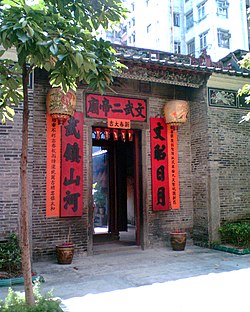
I walk in the street, it make me feel the tradition and western combination. First I saw Man Mo Temple, commonly sort of temple worshipping the Man Tai, Pau Kung and Mo Tai , Kwan Yu, to pray for good results in examinations in China. Is it special? Many parents bring their children visit the temple. They hope the good result or study in famous from their children. But finally, studies work hard is the important point to be success. I remind you one thing, it id unhealthy place because the dense smoke spread in there. Be careful!


In The next time , I will contnue to introdue about Hollywood Road. It is the long-long story. Don’t miss it!

How to go:
1. Bus 26 outside Pacific Place at Admiralty to Hollywood Road and get off near Man Mo Temple.
2. MTR Central Station Exit D2 and turn right to Theatre Lane. Walk along Queen's Road Central towards The Center. Then take the Central - Mid-Levels Escalator to Hollywood Road.

By Renee Lam